
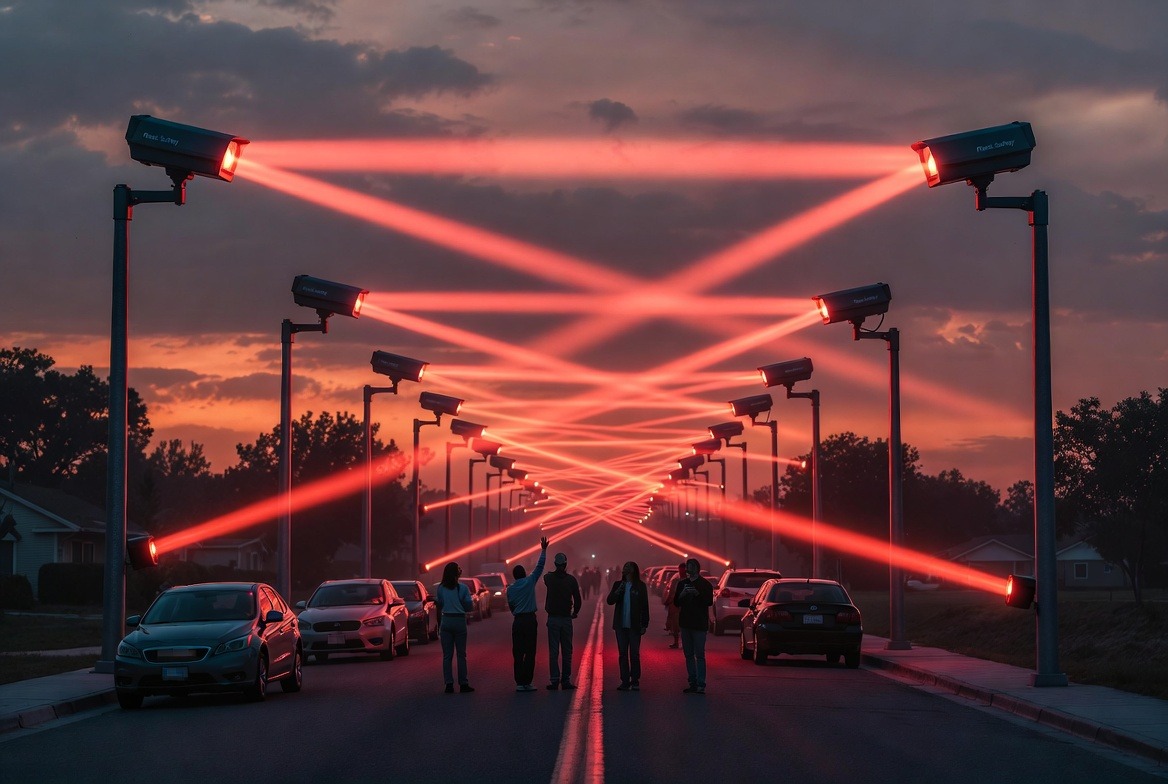
Across the United States, a powerful and growing movement is pushing back against Flock Safety’s network of automated license plate readers (ALPRs). Residents, activists, and even some local officials are rejecting these corporate surveillance tools that track drivers’ movements in unprecedented detail, raising serious alarms about privacy erosion, potential for abuse, and data sharing with federal immigration authorities.
Flock cameras snap photos of license plates, vehicle make/model/color, and timestamps, uploading the data to a cloud system accessible to police departments nationwide—and potentially beyond. Critics argue this creates a detailed, warrantless record of people’s daily lives, enabling everything from routine policing to more troubling uses.
Recent Wins for Privacy Advocates
The backlash is accelerating. As of May 2026, at least 82 Flock contracts had been terminated across 28 states, with 39 cancellations occurring in just the first five months of the year alone.
In July 2026, the Los Angeles Police Department suspended its use of Flock cameras and declined to renew its contract amid mounting privacy concerns, data control issues, and questions about sharing with other agencies, including immigration authorities. An inspector general audit had urged a pause on new deployments until stronger oversight rules were in place.
In Atlanta in April 2026, demonstrators gathered for the “Flock and ICE Out of ATL” protest outside Flock Safety’s headquarters, highlighting fears that the cameras feed into broader surveillance networks used for immigration enforcement.
Other flashpoints include heated public meetings in Asheville, North Carolina (where residents chanted “Shame!” during a council vote on expanded surveillance tech), contract terminations in places like Bandera, Texas (following vandalism of cameras), and legal pushback in Troy, New York, and San Jose, California. In Cleveland, records revealed dozens of immigration-related searches using Flock data, contradicting earlier assurances.
DeFlock.org, a crowdsourced mapping project, has played a central role. It has documented tens of thousands of cameras (with Flock dominating the network) and spawned popular apps that help drivers avoid surveillance zones. These efforts have fueled public awareness and organized resistance, leading to a National Week of Action and growing numbers of community groups demanding contract cancellations.
Flock’s CEO Attacks Critics Instead of Addressing Concerns
Flock Safety’s leadership has responded to this legitimate public outcry with inflammatory rhetoric rather than meaningful engagement. CEO Garrett Langley has repeatedly framed privacy advocates and DeFlock organizers as extremists intent on undermining law enforcement.
In a December 2025 email to law enforcement clients, Langley described the growing opposition as a “coordinated attack” from “the same activist groups who want to defund the police, weaken public safety, and normalize lawlessness.” He accused critics of producing “misleading” YouTube videos and turning public records requests into weapons against police and the company.
Earlier, in a 2025 interview, Langley labeled DeFlock a “terroristic organization.” He has also suggested that opponents are effectively “trying to let murderers go free.”
These statements are not just defensive—they are deeply troubling. They dismiss genuine concerns from everyday residents, civil liberties groups, and even some law enforcement watchdogs as radical or anti-safety extremism. By smearing non-violent activists who are simply mapping cameras and exercising their First Amendment rights through protests, public comments, and records requests, Langley reveals a company more focused on protecting its profits than engaging honestly with the very real risks of mass surveillance.
In July 2026, Langley issued a partial apology for the “terroristic” label, acknowledging “valid criticisms” and claiming the company wants balance. But the earlier attacks remain on record and underscore how Flock has chosen confrontation over accountability.
Why the Opposition Is Growing
Flock claims its technology helps solve crimes and locate missing persons. Yet independent analyses and community experiences highlight serious flaws: documented cases of officers misusing data for personal stalking (at least 16 firings reported in some reviews), data access by ICE for immigration enforcement, and limited transparent evidence of broad crime-reduction benefits that outweigh the privacy costs.
These cameras represent a shift toward normalized, always-on tracking of law-abiding citizens. In an era of heightened concerns over government overreach and data misuse, communities are rightly saying “enough.”
The deflock movement is not fringe—it is a mainstream defense of civil liberties. From small towns to major cities, residents are organizing, mapping cameras, pressuring elected officials, and successfully rolling back contracts. More terminations and policy restrictions are likely as awareness spreads.
Flock Safety’s aggressive defense and its CEO’s past attempts to paint critics as enemies of public safety only highlight why this resistance matters. The growing protests and contract cancellations send a clear message: Americans are waking up to the dangers of unchecked corporate-government surveillance and are taking action to protect their privacy and freedom. The momentum is on the side of communities reclaiming control over their streets and their data.
The fight to deflock America is just getting started—and it’s winning.
Comments
One response to “Communities Fight Back: The Surging Grassroots Revolt Against Flock Safety’s Invasive Surveillance Cameras”
Flock has a hidden weakness many don’t know:
public records requests.
Activists have successfully forced at least 8 cities to shut down Flock programs, either by exposing unauthorized data access or showing the footage was publicly accessible.
One of the most effective ways to take down Flock cameras? FOIA/PRA requests.
Here’s a template to file one in your city:
To the Custodian of Records:
Pursuant to the (your state here) Public Records Act (your state’s public records act code.), I request access to and copies of the following public records relating to the (your local police) Police Department’s surveillance camera network reportedly consisting of more than 2,600 cameras deployed throughout the city.
Please provide records covering the period January 1, 2020 through present unless otherwise specified.
1. Policies and Legal Authority
All policies, procedures, memoranda, directives, or legal analyses governing:
-The deployment and operation of surveillance cameras within __________
-Any legal justification for the program under federal or state constitutional law
-Policies governing Fourth Amendment considerations or privacy protections
-Any City Council ordinances or resolutions authorizing the camera network
2. Contracts and Vendors
All contracts, agreements, memoranda of understanding, purchase orders, or amendments with vendors or service providers related to:
-Surveillance cameras
-Automated license plate readers
-Real-time crime centers
-Video analytics, facial recognition, or artificial intelligence
-Data storage or cloud services used for camera footage
Please include vendor proposals, RFP responses, and bid documents.
3. Camera Locations
Records identifying:
-The number and location of cameras deployed
-Maps, GIS datasets, or inventories of surveillance devices
-Any classification of cameras as public, private-partner, or third-party integrated cameras
(If precise coordinates are withheld, provide generalized location records or district-level inventories.)
4. Data Retention and Access
All records describing:
-Video retention schedules
-Policies for deletion or archiving of footage
-Which agencies or departments have access to the camera network
-Any data sharing agreements with other agencies including but not limited to:
-(your state) Highway Patrol -Federal agencies (FBI, DHS, ICE, etc.) -Regional task forces
5. Private Camera Integration Programs
All records relating to programs that integrate privately owned cameras into the police network, including:
-Agreements with homeowners, businesses, or HOAs
-Terms of participation
-Data access rights granted to the police department
6. Surveillance Technology Capabilities
Records describing whether the system includes or supports:
-Facial recognition
-License plate recognition
-Behavioral analytics
-Crowd detection
-Real-time monitoring centers
7. Crime Reduction Claims
All records, reports, studies, or internal analyses supporting claims that the surveillance network caused reductions in crime, including:
-Statistical reports
-Internal evaluations
-Communications discussing the effectiveness of the system
8. Communications
Emails, memoranda, and internal communications between (your city) Police Department personnel, City officials, or vendors referencing:
-Expansion of the camera network
-Privacy concerns
-Public opposition or legal review
Search terms should include: “camera network”, “surveillance cameras”, “real time crime center”, “Aerodome”, “Raven”, “ALPR”, “Flock”, “facial recognition”, and “camera integration”.
Format
Please provide records in electronic format via email or download link.
If any records are withheld, please provide the specific statutory exemption relied upon and produce all reasonably segregable portions of responsive documents.
Fee Waiver
This request concerns matters of significant public interest involving government surveillance and constitutional rights, and any fees should be waived or minimized.
I look forward to your response within the statutory timeframe.