
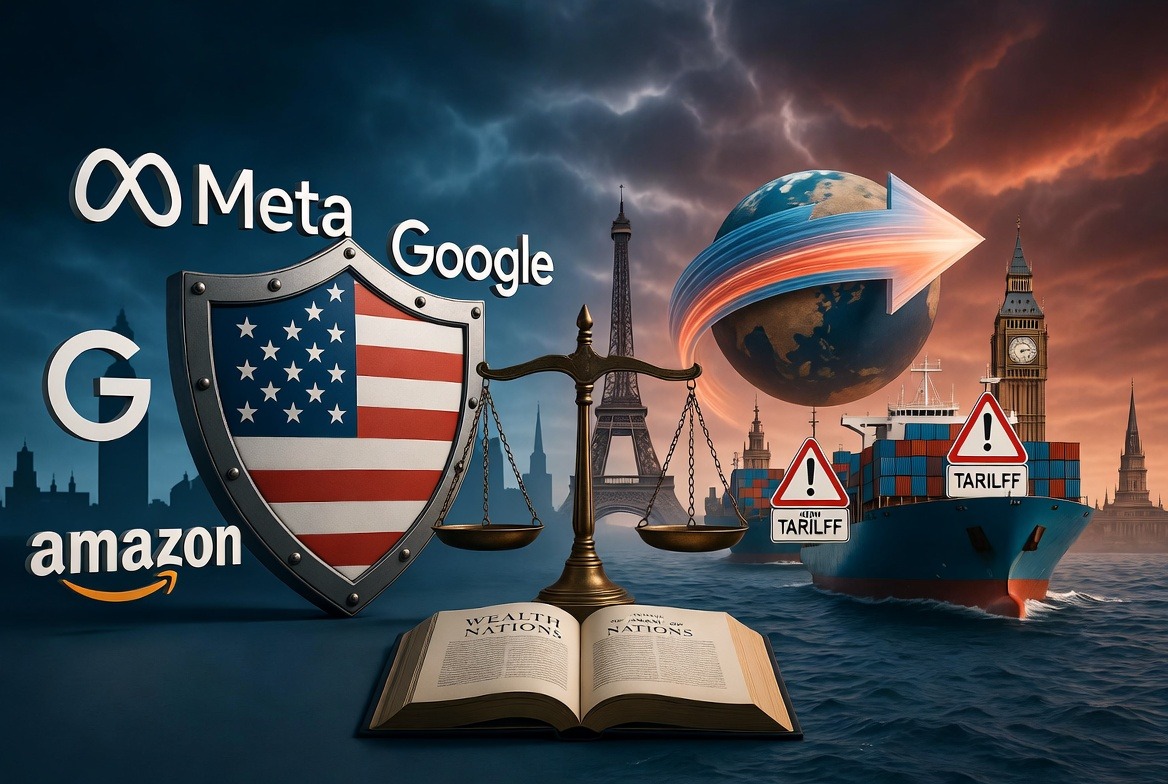
President Donald Trump issued a strong warning on Friday, threatening to impose 100% tariffs on goods from any country that enacts a digital services tax targeting American companies.
In a Truth Social post, Trump declared that such tariffs would “supersede Trade Deals made with the Country, whether implemented, signed, or not,” and would be imposed immediately if nations proceed with the levies.
The Context and Rationale
Digital services taxes, adopted or proposed by more than a dozen countries — many in Europe — typically target large tech firms based on revenue generated within their borders. These measures often focus on giants like Meta, Alphabet (Google), and Amazon, which are predominantly U.S.-based. Supporters of the taxes argue they ensure foreign companies pay their “fair share” for operating in local markets. Critics, including the Trump administration, view them as discriminatory and protectionist attempts to single out successful American innovation.
This latest threat continues Trump’s pattern of using tariffs as leverage to push back against policies perceived as unfair to U.S. businesses. Previously, similar pressure led Canada to scrap its proposed digital tax.
Balanced Perspectives
On one side, the policy aims to defend American technological leadership and prevent foreign governments from effectively taxing U.S. companies twice or disproportionately. Proponents argue that without strong retaliation, other nations could erode the global competitiveness of key U.S. industries that drive innovation, jobs, and economic growth.
On the other side, broad tariffs carry well-known risks. They can raise costs for American consumers and businesses that rely on imported goods, potentially sparking retaliatory measures from trading partners and disrupting supply chains. Legal questions also remain about the administration’s authority to impose such sweeping tariffs, especially following recent court rulings limiting certain executive trade powers.
A Classic Defense of Free Trade
As Adam Smith argued in The Wealth of Nations, free trade allows nations to specialize in what they produce most efficiently, fostering mutual prosperity through voluntary exchange. “By means of glasses, hotbeds, and hot walls,” Smith noted, countries can grow grapes in Scotland — but at great expense compared to importing wine from France. Tariffs, in this view, distort markets, raise prices, and ultimately hurt the very consumers and producers they claim to protect. Open commerce encourages innovation and efficiency, benefiting all parties over the long term.
In today’s digital economy, this principle suggests that unrestricted access to global markets has fueled the rise of U.S. tech dominance. While targeted responses to unfair foreign taxes may be justified, broad tariff escalations risk moving away from the gains of comparative advantage that Smith championed.
Outlook
The effectiveness and legality of Trump’s threatened 100% tariffs will likely face scrutiny in the coming weeks. The move highlights ongoing tensions in international trade: balancing the protection of domestic interests against the broader benefits of open markets. How trading partners respond could shape global tech competition and economic relations for years to come.
This article synthesizes reporting from CNBC (June 26, 2026) and related trade policy developments.