
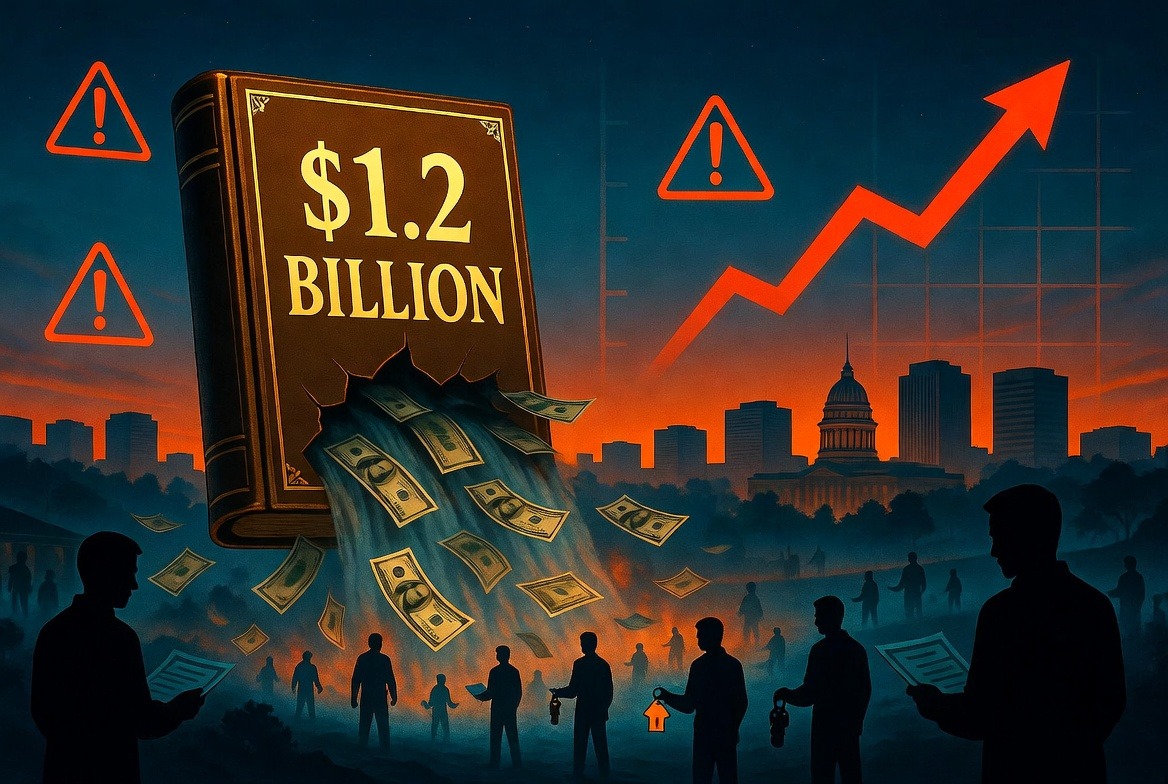
Boise city leaders are barreling ahead with a proposed fiscal 2027 budget of $1.2 billion — the largest in the city’s history and a sharp leap from the $949 million approved for 2026 and $877 million the year before.
This isn’t modest growth to keep pace with inflation or population. It’s another step in the steady expansion of local government at a time when many residents are already feeling the squeeze from rising housing costs and previous tax hikes.
Property Taxes Still on the Rise
Property taxes, which make up about 62% of the city’s general fund revenue, would increase by 2.7% under the latest proposal. City officials initially eyed the maximum allowed under state law — a full 4% hike including forgone taxes — before dialing it back after discovering roughly $2.9 million in unexpected revenue from higher-than-projected new construction values and the expiration of the Westside Urban Renewal District.
That “savings” for taxpayers is being spun as restraint. In reality, it’s still an increase layered on top of years of maximum or near-maximum hikes permitted by House Bill 389. The city has routinely hit those caps in recent years, with the FY2026 budget alone featuring a significant property tax increase.
Spending Priorities Reveal the Pattern
The proposed budget includes millions for maintenance — $5.75 million for building upkeep, $3.75 million for playground repairs, and $2.7 million for pool fixes — alongside the addition of nine new staff positions (the smallest increase since the pandemic). Officials cite rising costs for software, fuel, and insurance as justification.
Development fees from projects like Micron’s expansion and multifamily housing are helping offset some needs. Yet the city still turns to taxpayers for the balance rather than aggressively prioritizing, cutting waste, or finding efficiencies.
Critics have long pointed out that Boise’s general fund revenue has grown far faster than population or inflation in recent cycles. Staffing levels and certain enterprise funds have expanded at rates that outpace what a lean, responsive government should require.
State-Level Contrast Highlights the Difference
This stands in contrast to the more disciplined approach at the state level. Governor Brad Little’s “Enduring Idaho” plan for FY2027 emphasizes fiscal responsibility, maintenance-level budgeting in many areas, and avoiding new debt or structural deficits.
While the state grapples with its own pressures and makes targeted reductions, Boise appears committed to a formula-driven model that treats spending growth as inevitable. Council members themselves expressed concerns during discussions about deferred maintenance, lack of flexibility for innovation, and the risk of difficult future decisions if the city doesn’t take every available tax dollar.
The Real Cost to Boise Residents
Boise’s population and economy have grown rapidly, bringing new demands for services. But when city spending consistently outpaces that growth — and when residents are already being priced out of the very community they’re funding — it raises legitimate questions about priorities and accountability.
The proposed budget heads to a public hearing on July 14 before a final vote. Taxpayers deserve more than assurances that “growth should pay for itself” while the city keeps finding ways to extract more from their pockets.
This isn’t about opposing necessary services. It’s about demanding that city government live within its means, prioritize ruthlessly, and respect the burden already placed on working families and businesses. Record budgets like this one don’t happen by accident — they reflect choices. Boise residents should make their voices heard before those choices become permanent.